Pairs of words that get confused, and one thing that does not exist. Every one of these has caused a real misunderstanding, which is why they are here rather than a list of obvious definitions.
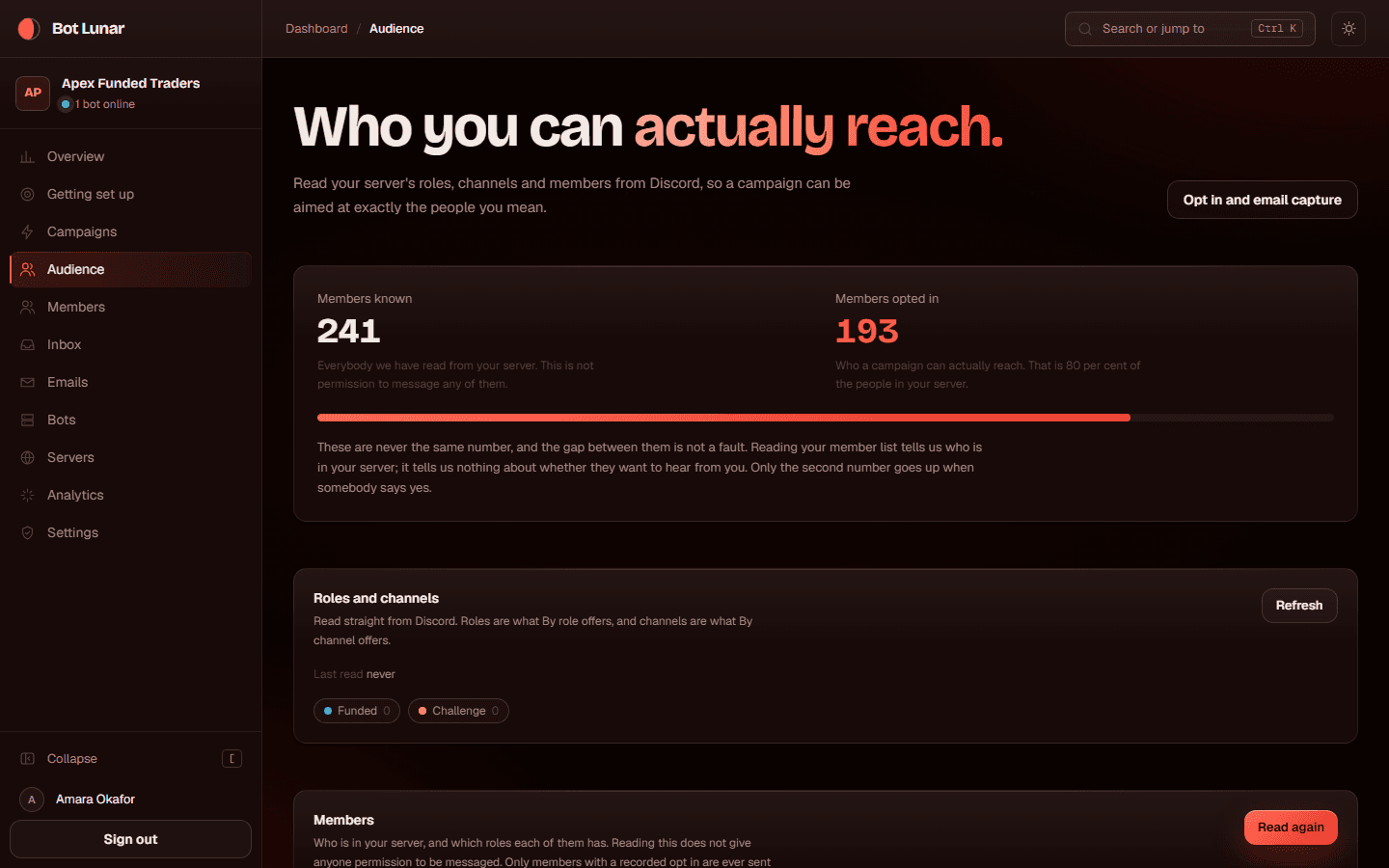
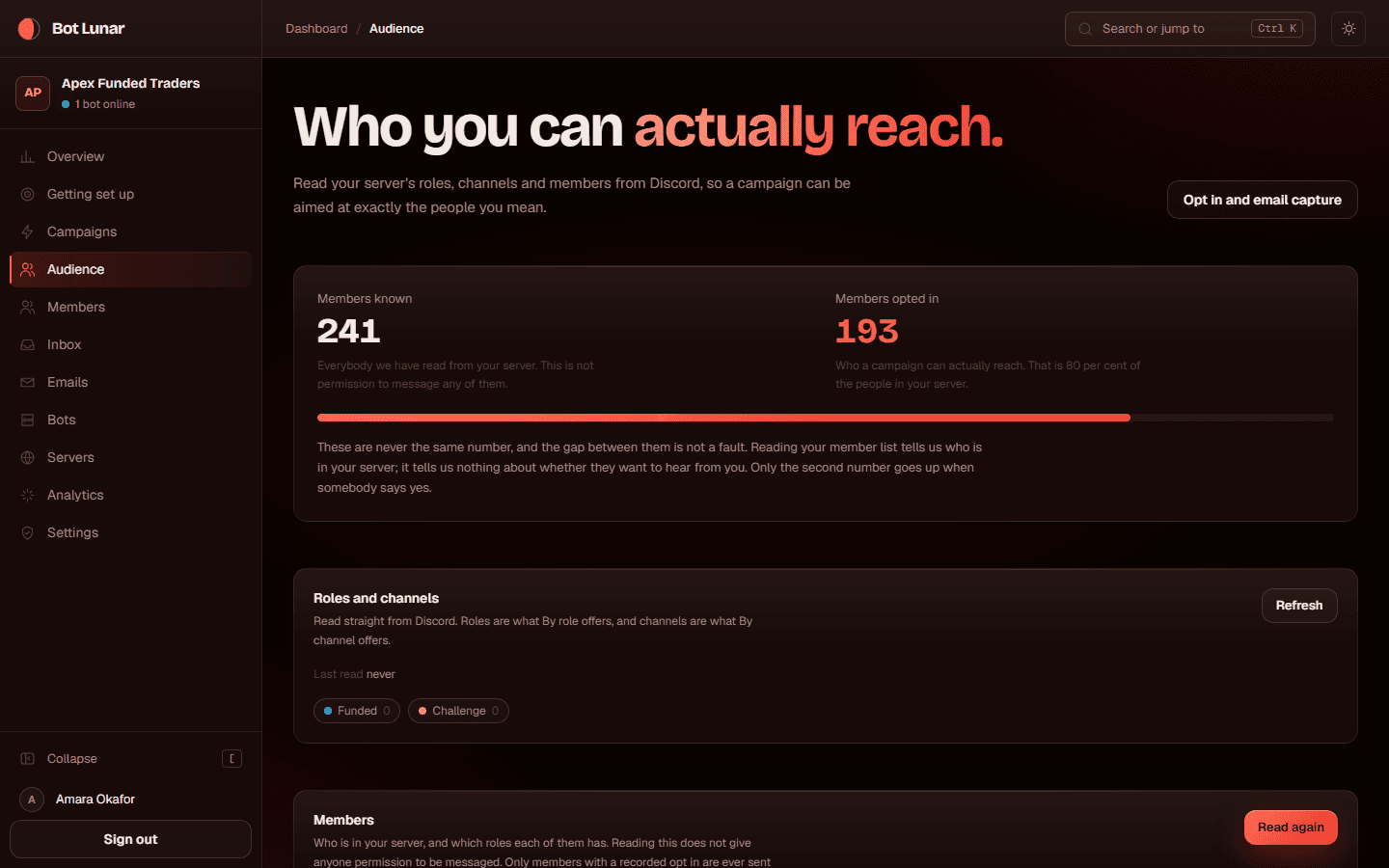
- Known members, and opted-in members
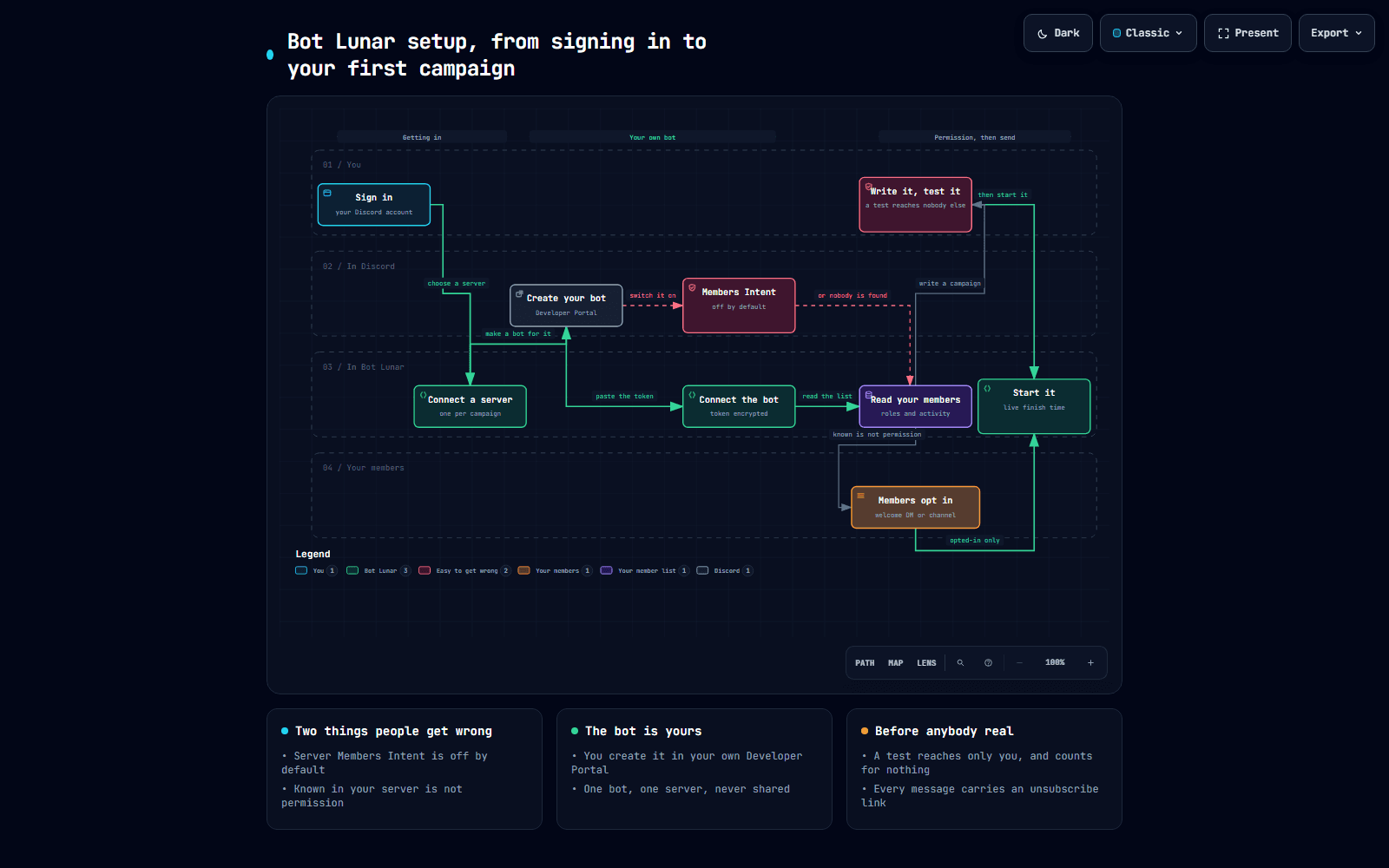
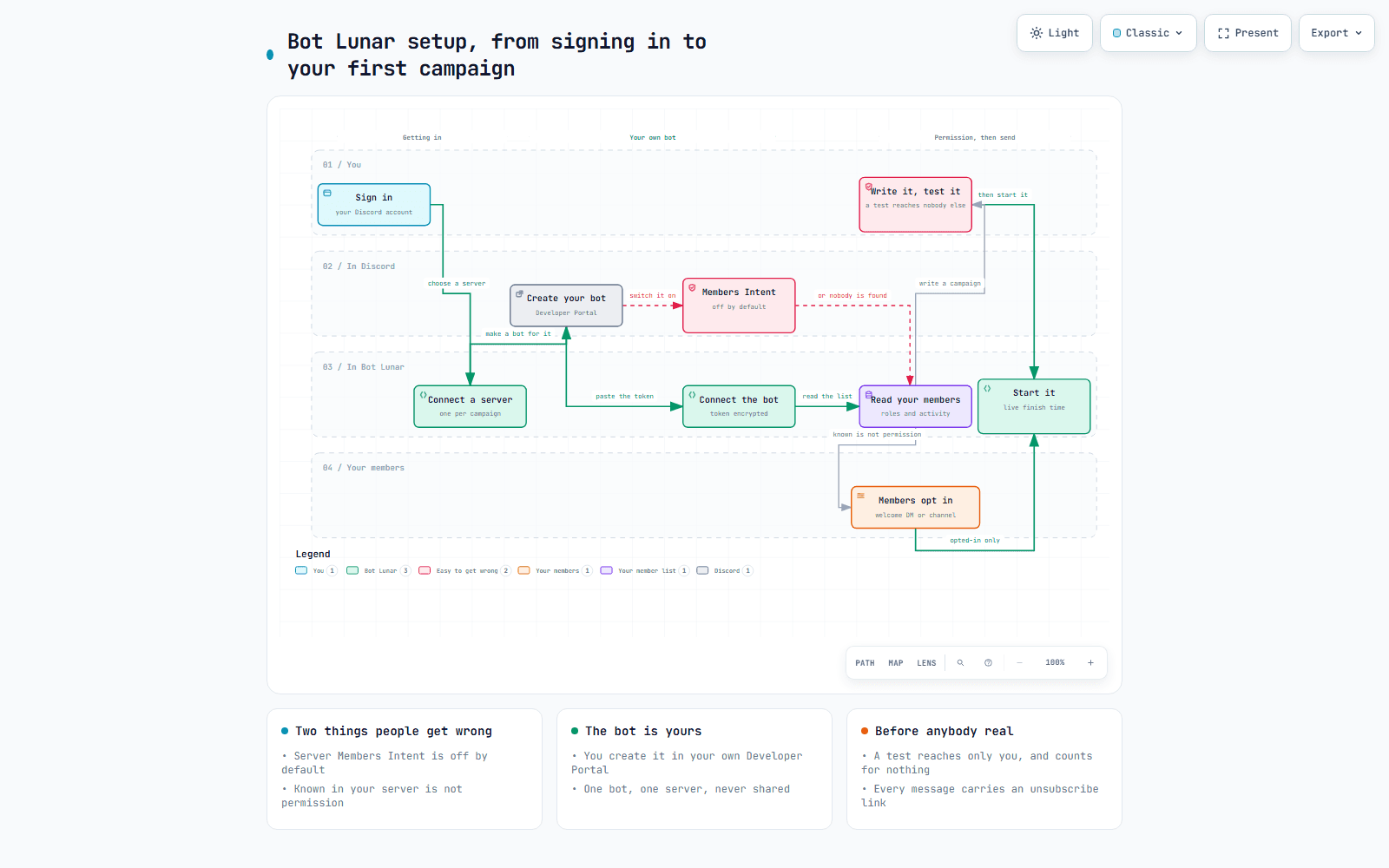
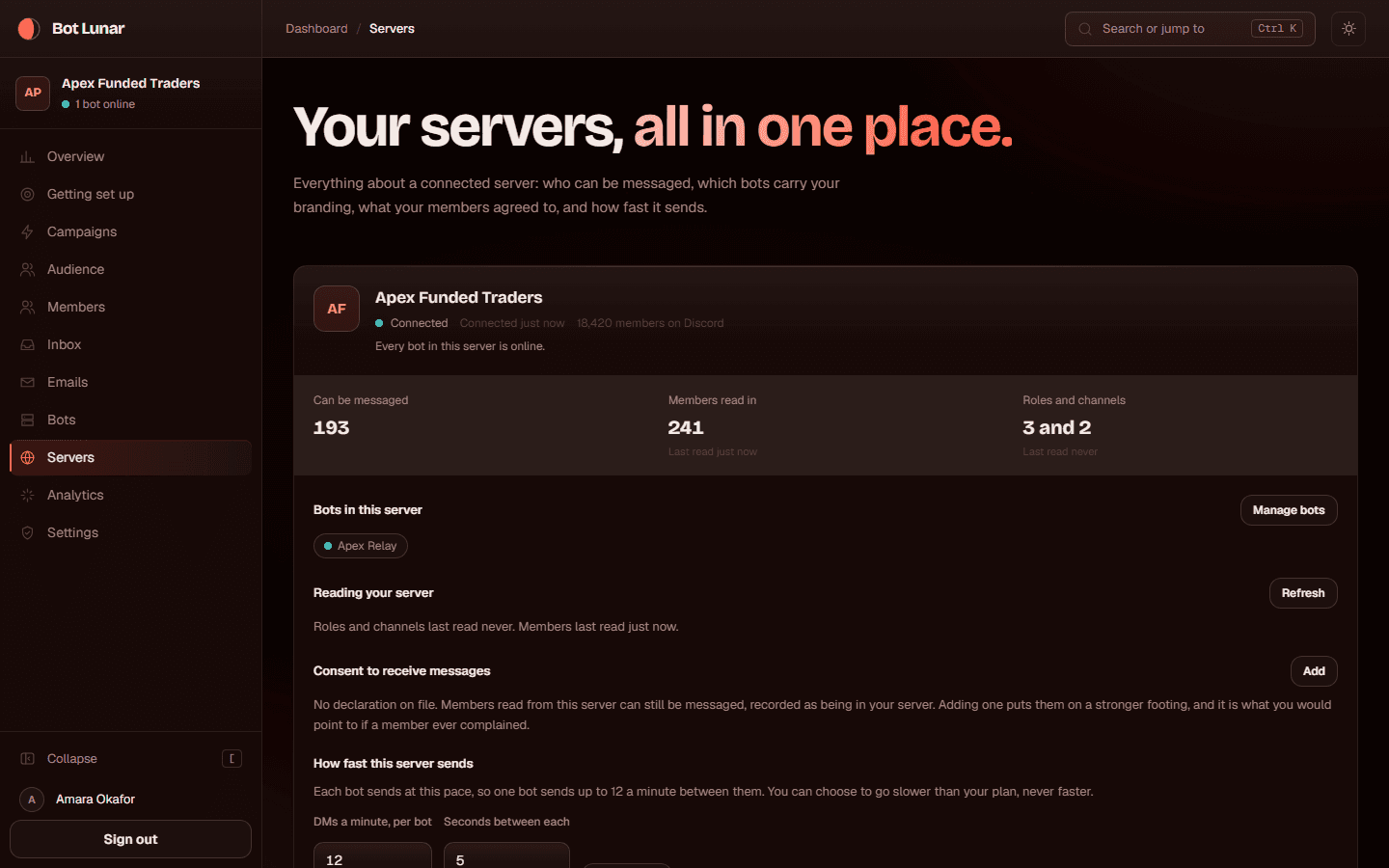
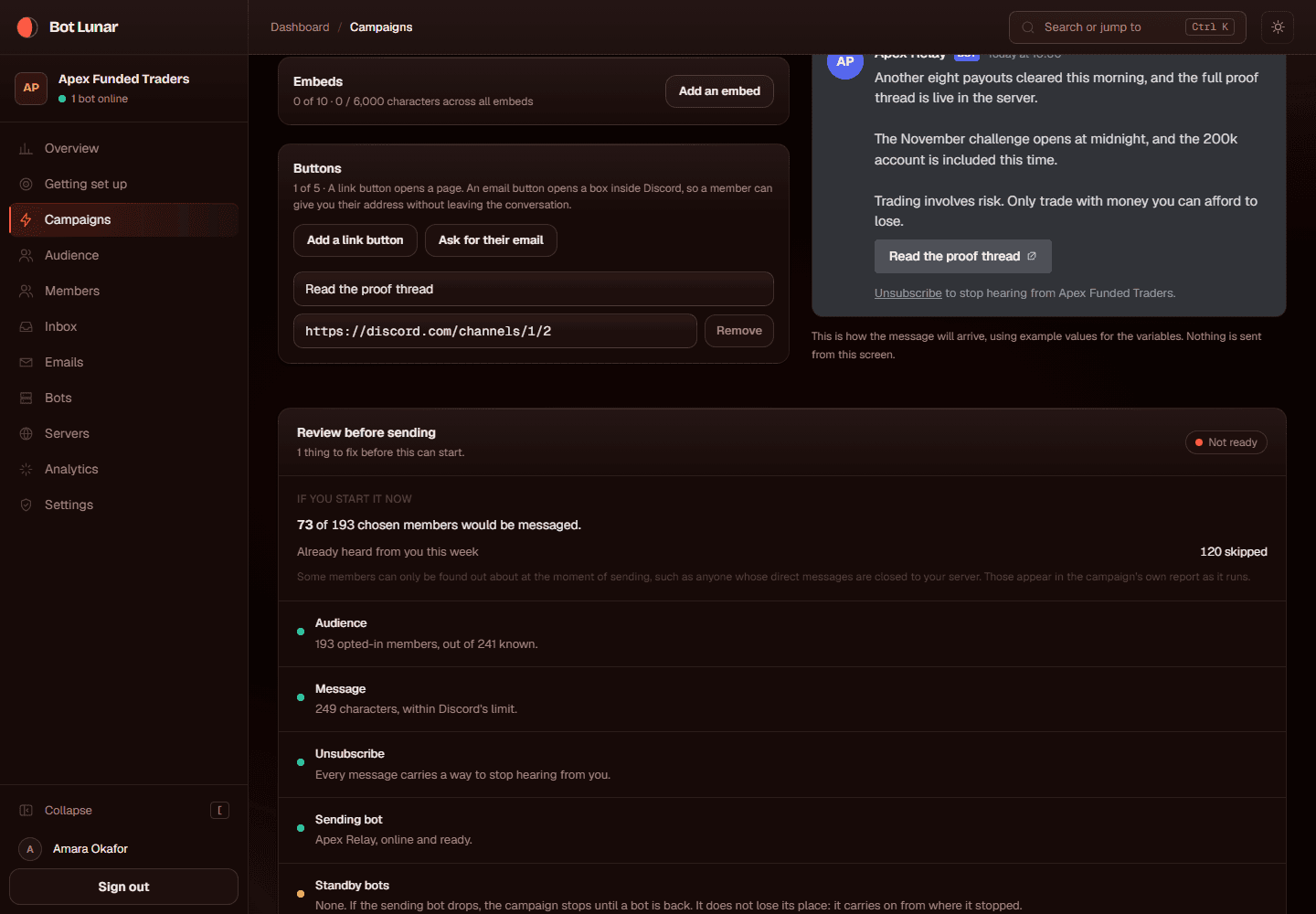
- Known members are everybody we read from your Discord server. Opted-in members are the ones you may actually message. Reading somebody is not permission to message them, and the second number is always smaller, often much smaller at the start. Every audience rule in the product is limited to the second number, and there is no way to move somebody from the first to the second by hand.
- Discord's member total, and synced members
- Discord's own total, the one on your server, counts everybody including bots and people Discord still has cached. Synced members is what Discord actually handed us when we read your member list. A gap of a few per cent is normal. A gap of ninety per cent is the Server Members Intent being switched off.
- Accepted by Discord, and delivered
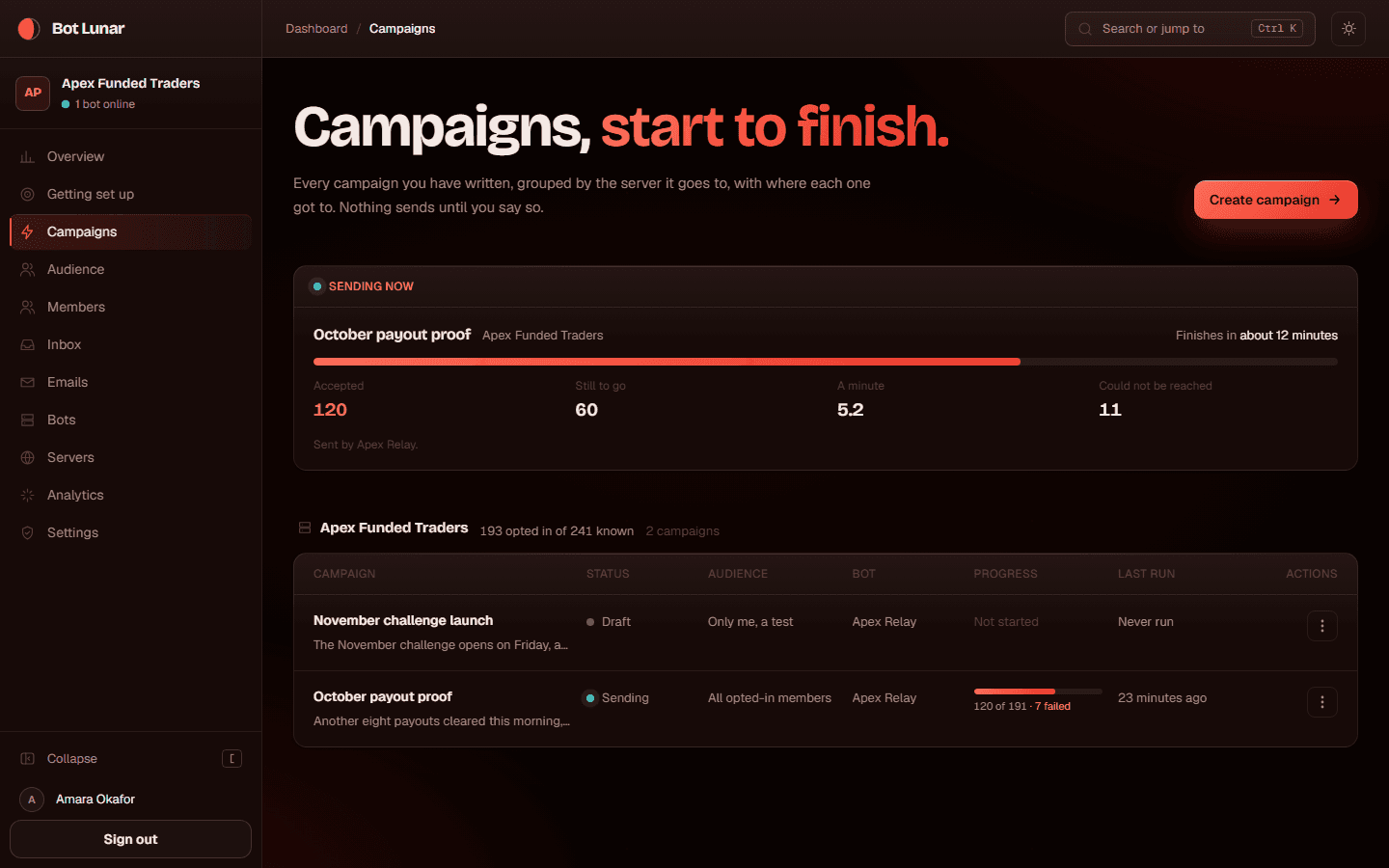
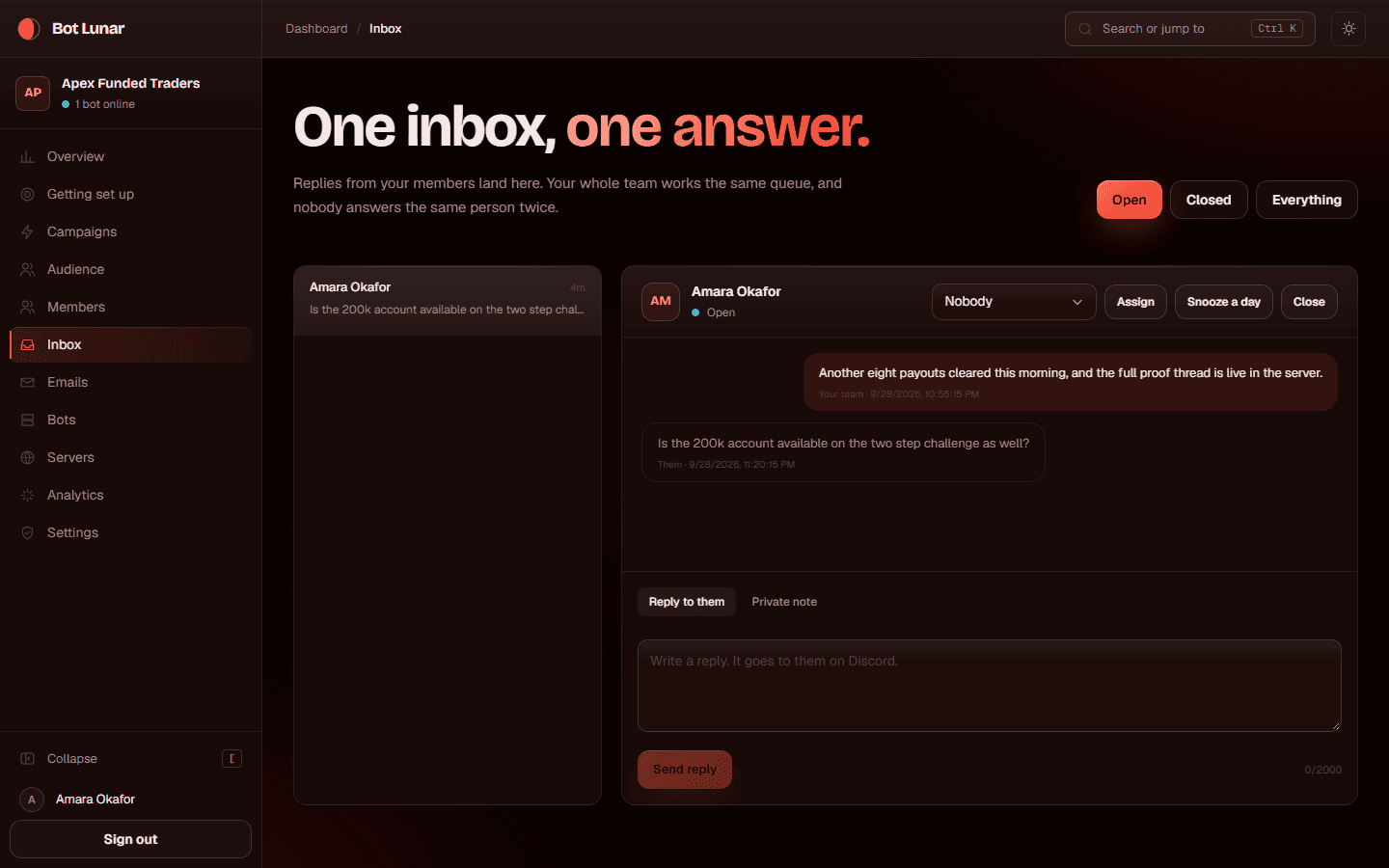
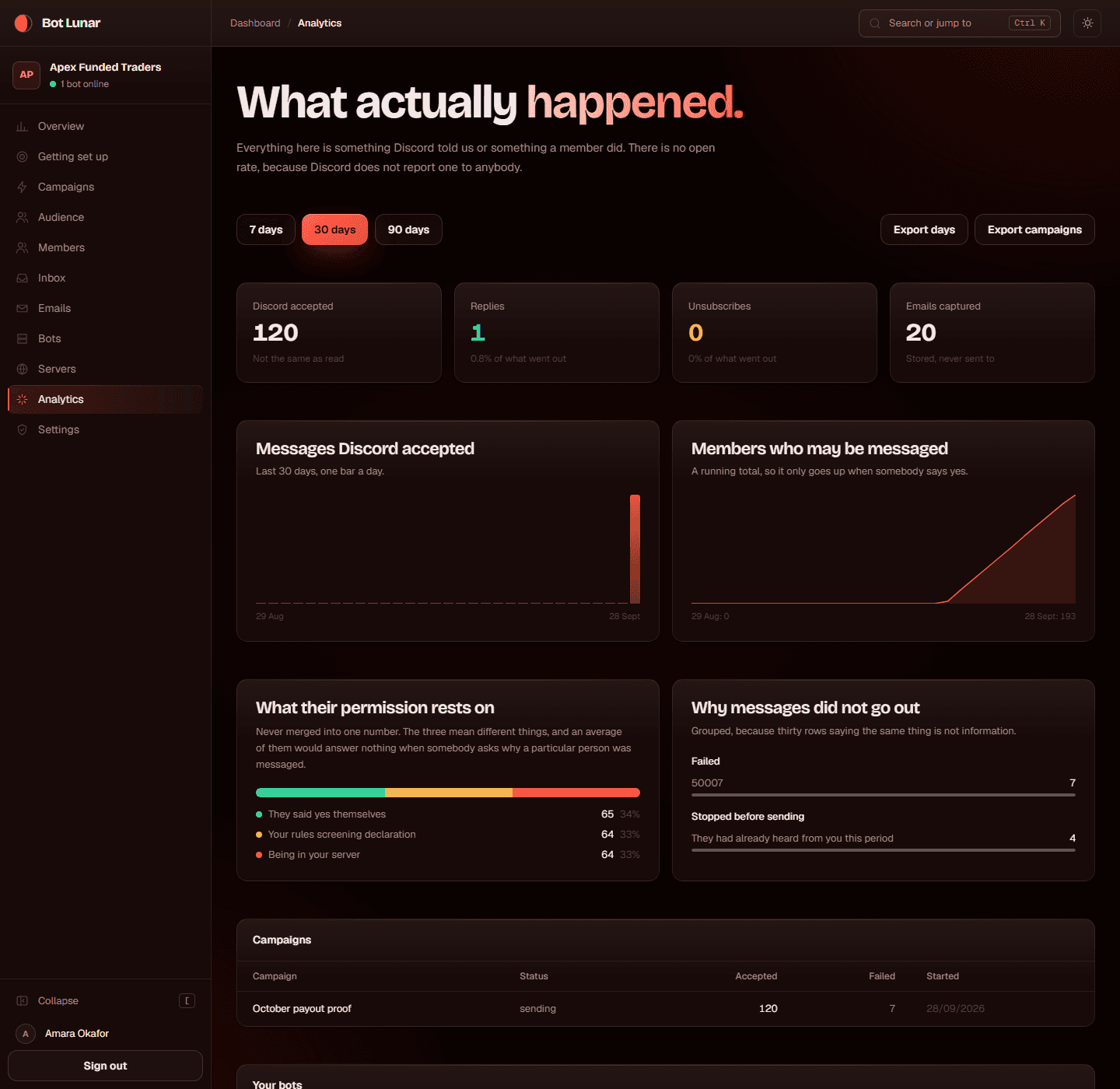
- Accepted means Discord took the message from us. That is all it means, and all we will ever claim. Delivered would mean it reached somebody, and Discord gives no delivery receipt for a direct message, so nothing in this product ever sets it. We keep the two words apart everywhere rather than merging them into one friendlier number.
- Why there is no open rate
- Nobody can measure whether a Discord direct message was read. There is no tracking pixel in a Discord DM, no read receipt a bot can see, and no API that reports it. Any tool showing you an open rate for Discord direct messages is showing you a number it cannot know. We would rather be the one that says so.
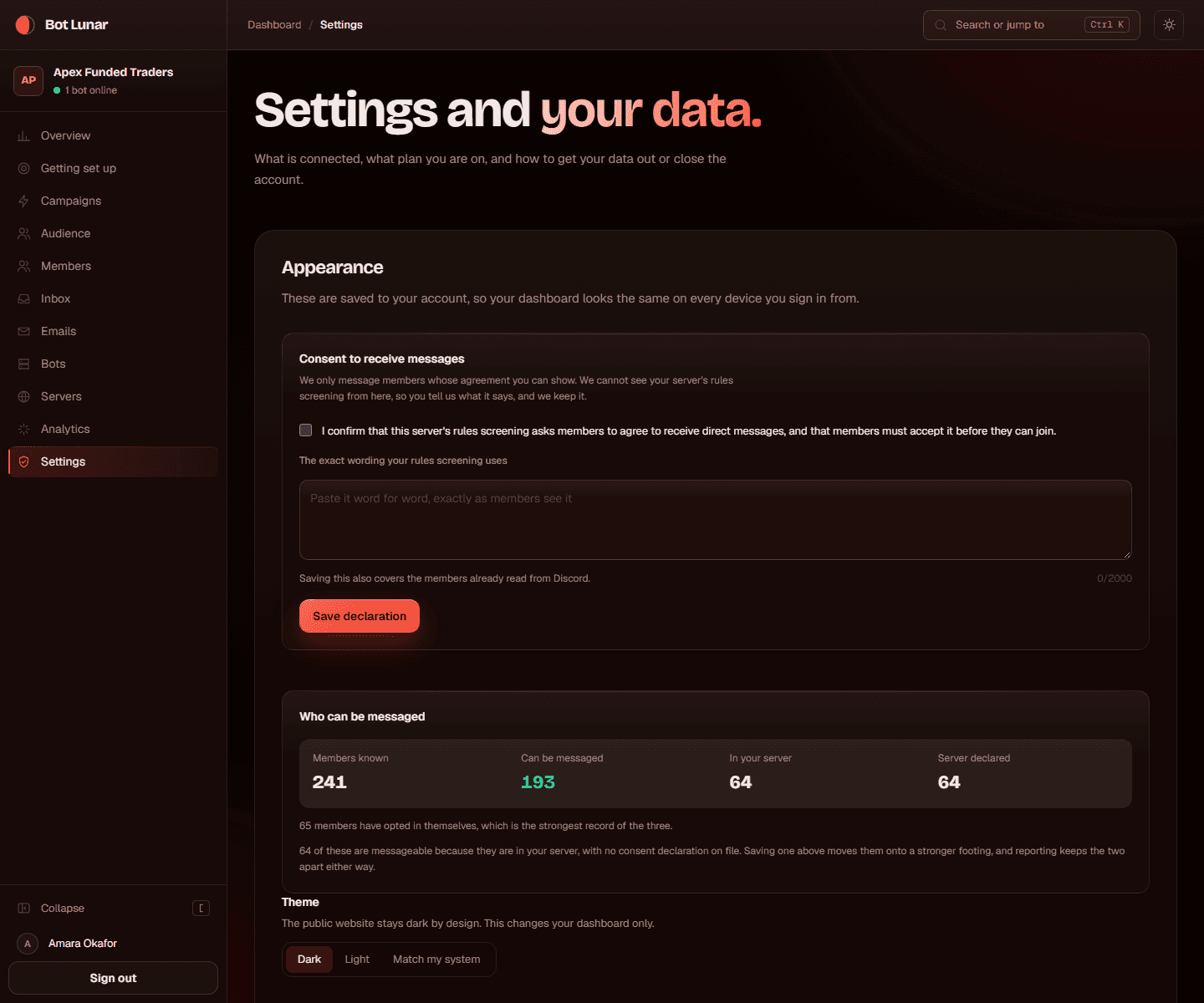
- The three permission bases, never merged
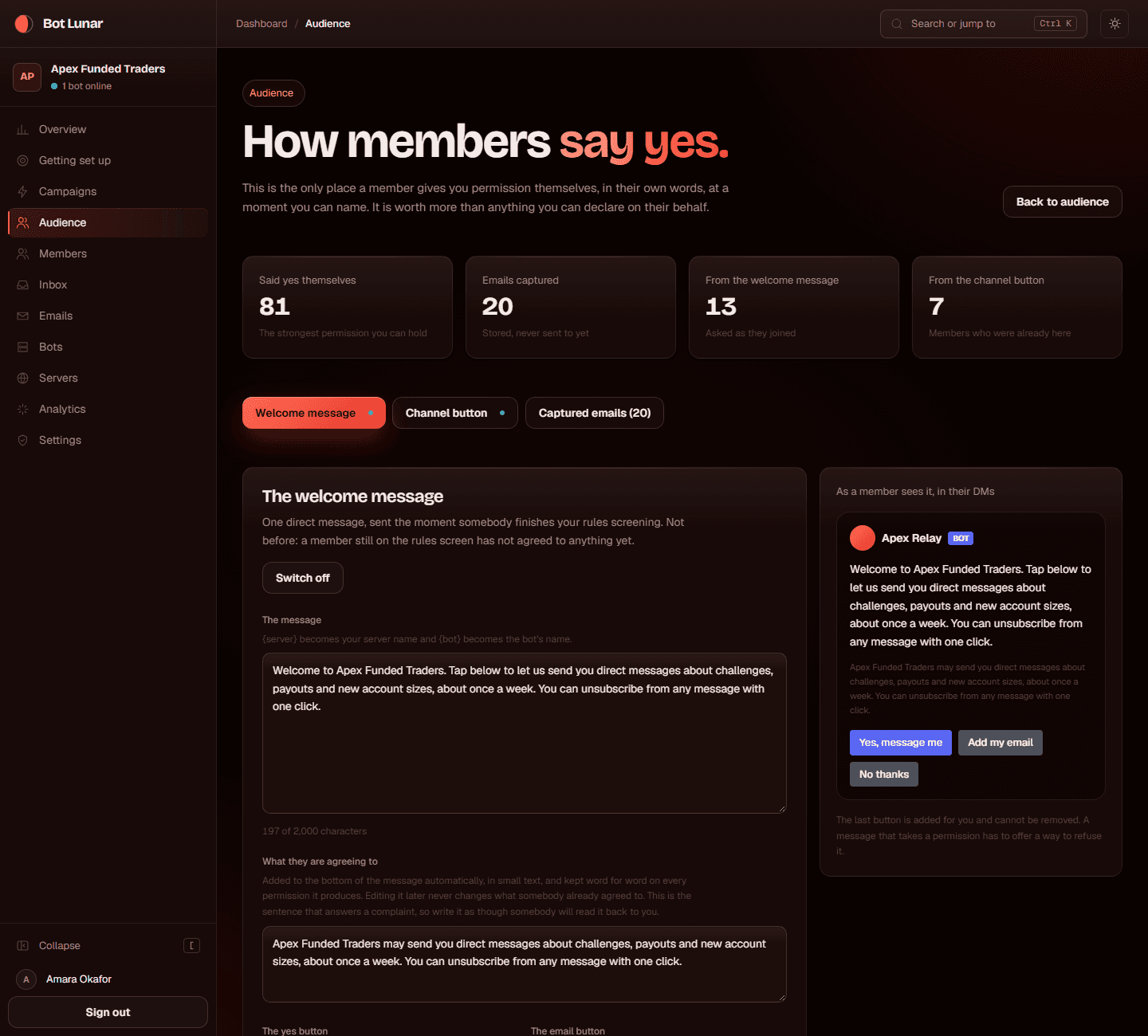
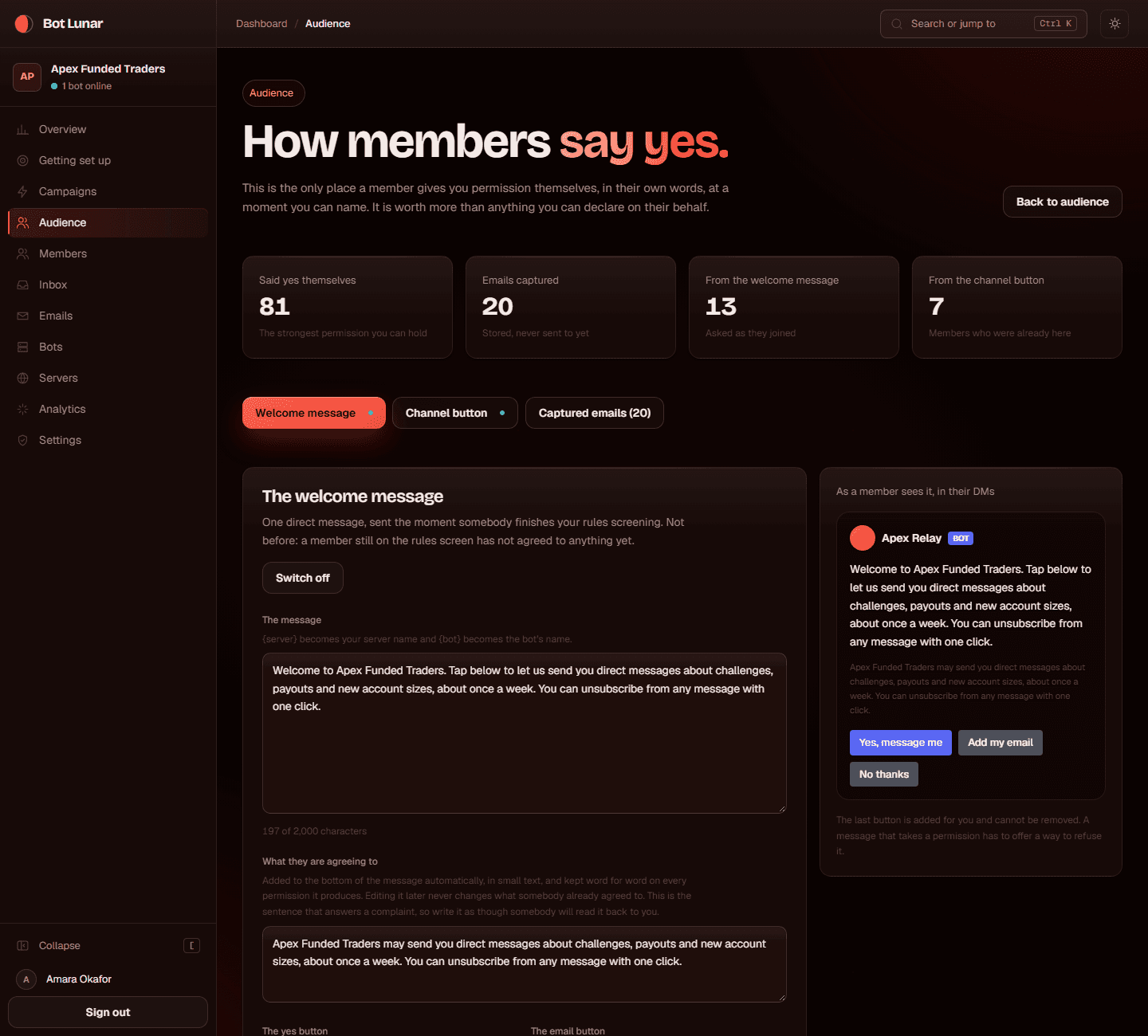
- They said yes themselves is a member pressing a button, and it is the strongest. Your rules screening declaration is your word about your own server, which is weaker. Being in your server is the weakest, and applies when no declaration is on file. We record which one every single message relied on, copied at the moment of sending so it cannot change afterwards, and we never add the three together, because an average of them would answer nothing if anybody ever asked.
- A failure, and a skip
- A failure is an attempt we made that Discord turned down, such as a member whose direct messages are closed. A skip is a decision of ours, made before we tried, such as the frequency cap or somebody who had unsubscribed. They are counted separately and grouped by reason, because one is about Discord and the other is about our own rules, and the fix is different.
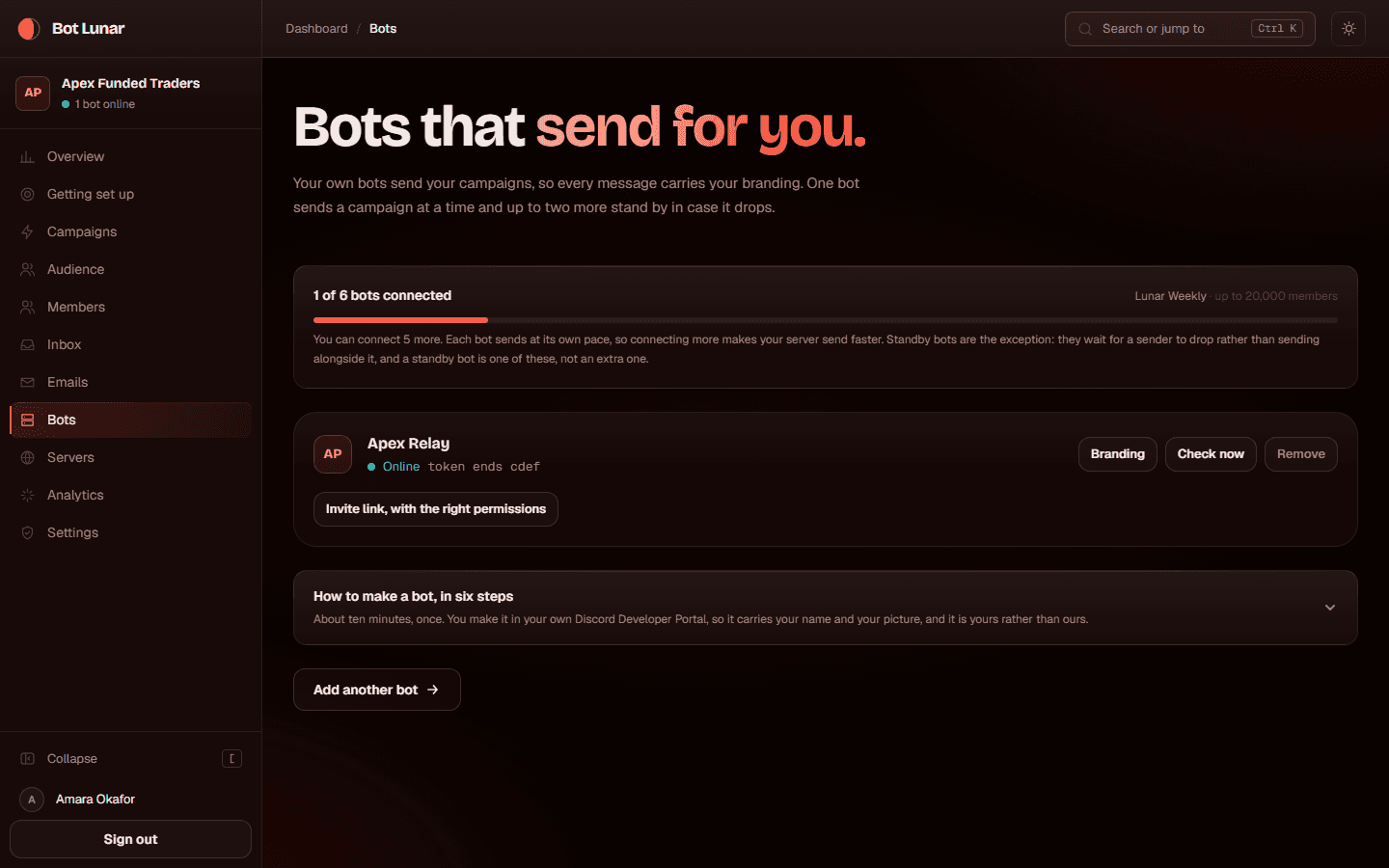
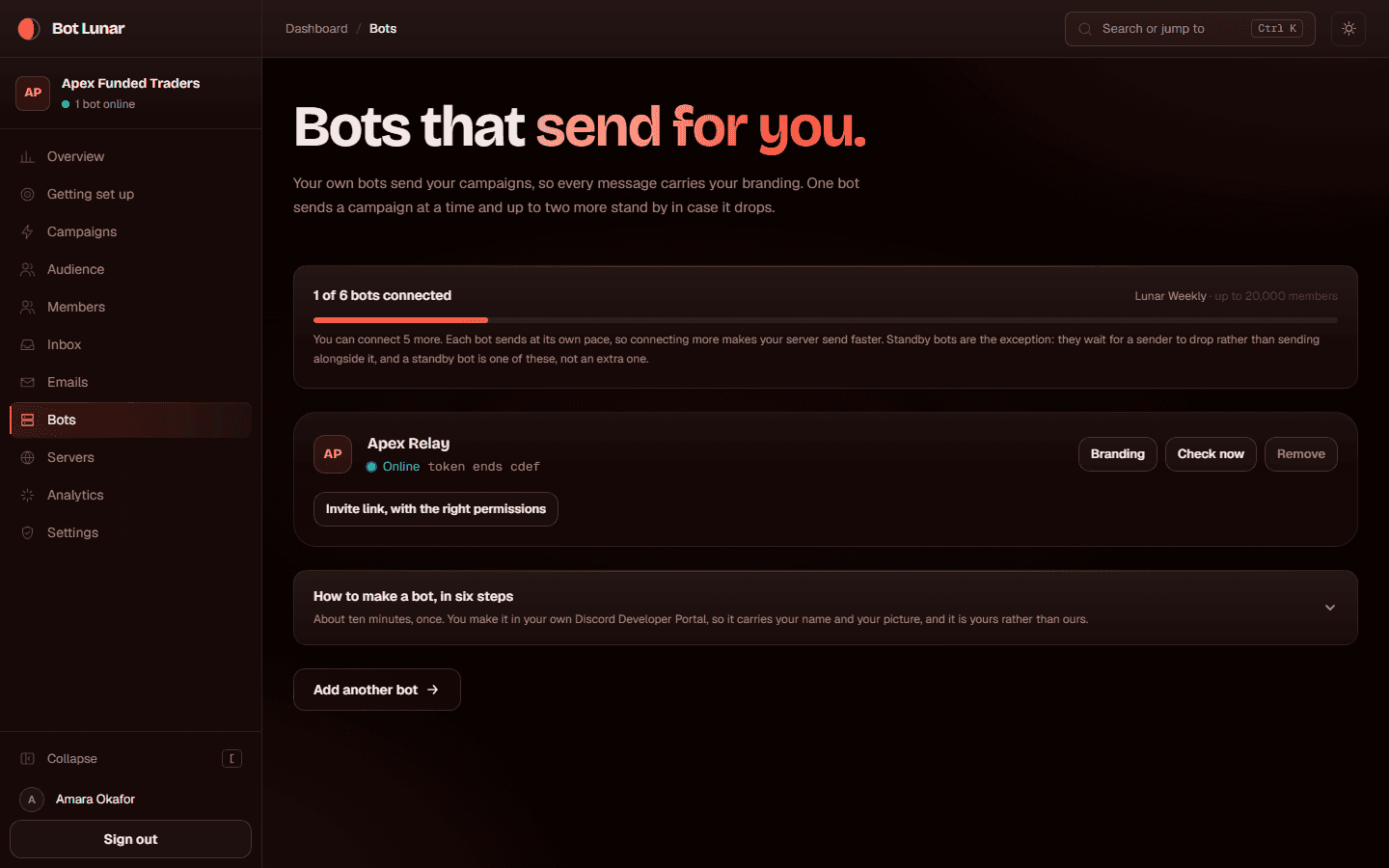
- A backup bot, and a sending bot
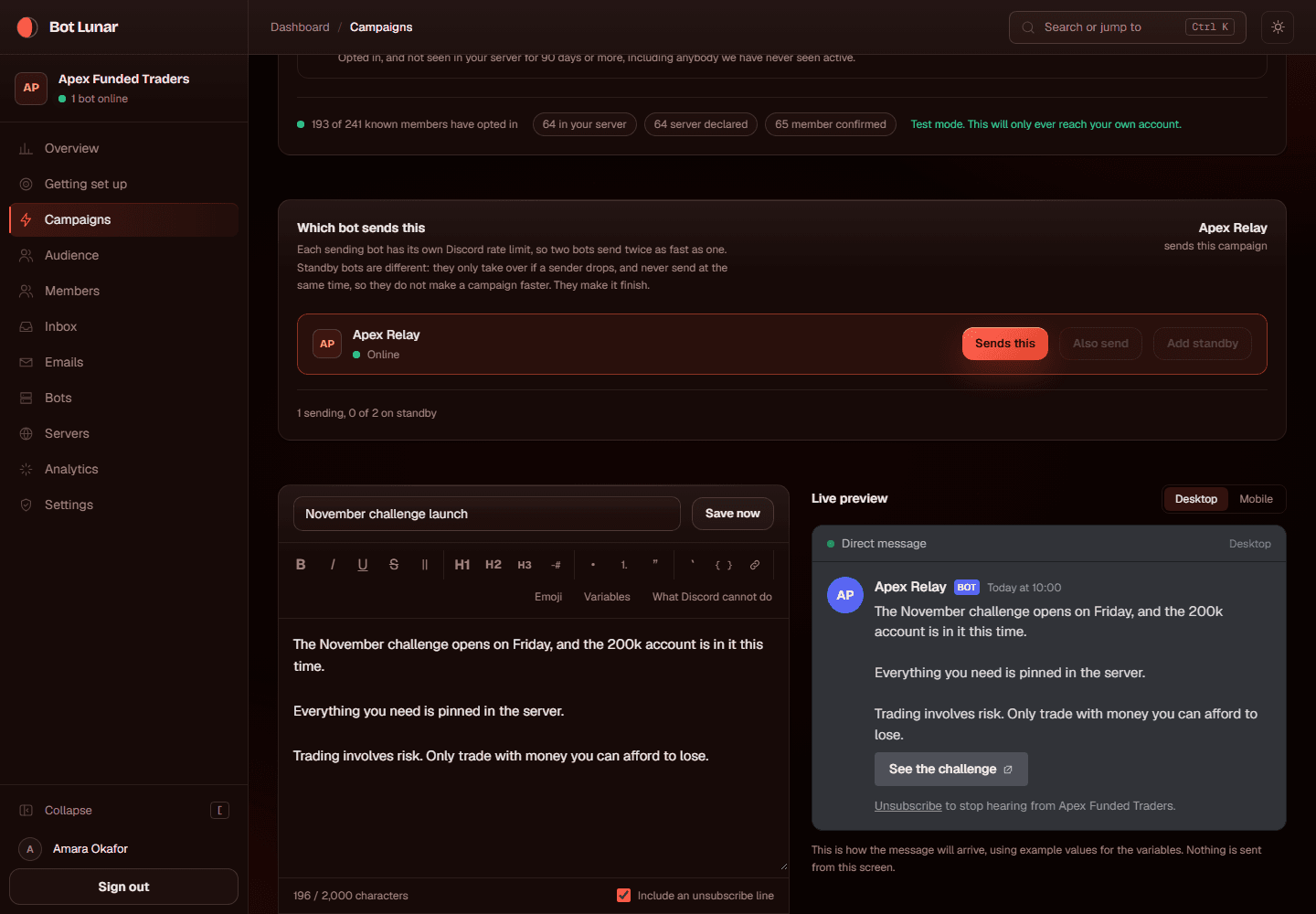
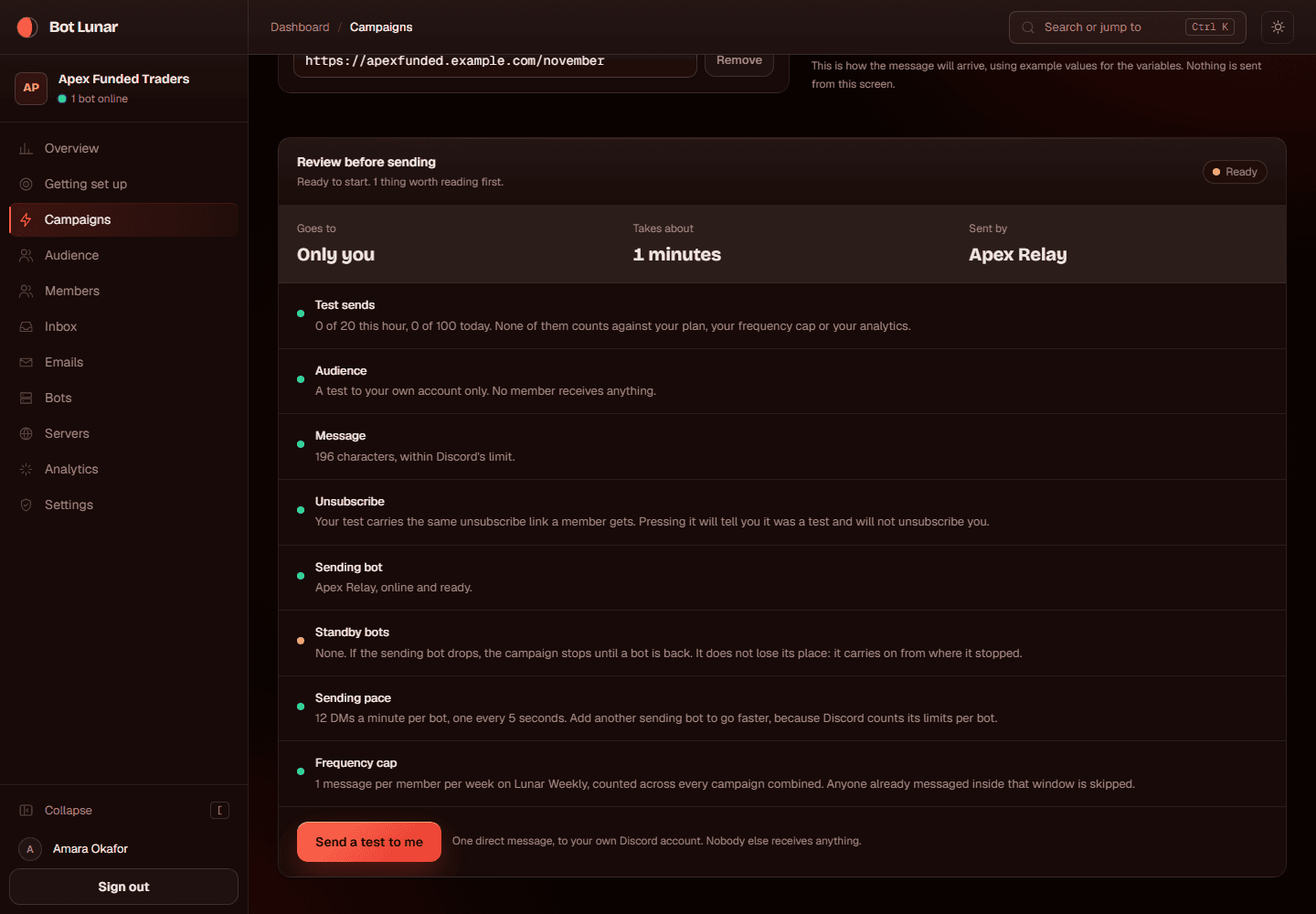
- A sending bot sends alongside the main bot, on its own Discord rate limit, which is what makes a campaign finish sooner. A backup bot waits, and takes over only if the main bot goes offline, so it never sends at the same time and never makes anything faster. Backups make a campaign finish. Extra sending bots make it finish sooner.
- A test send
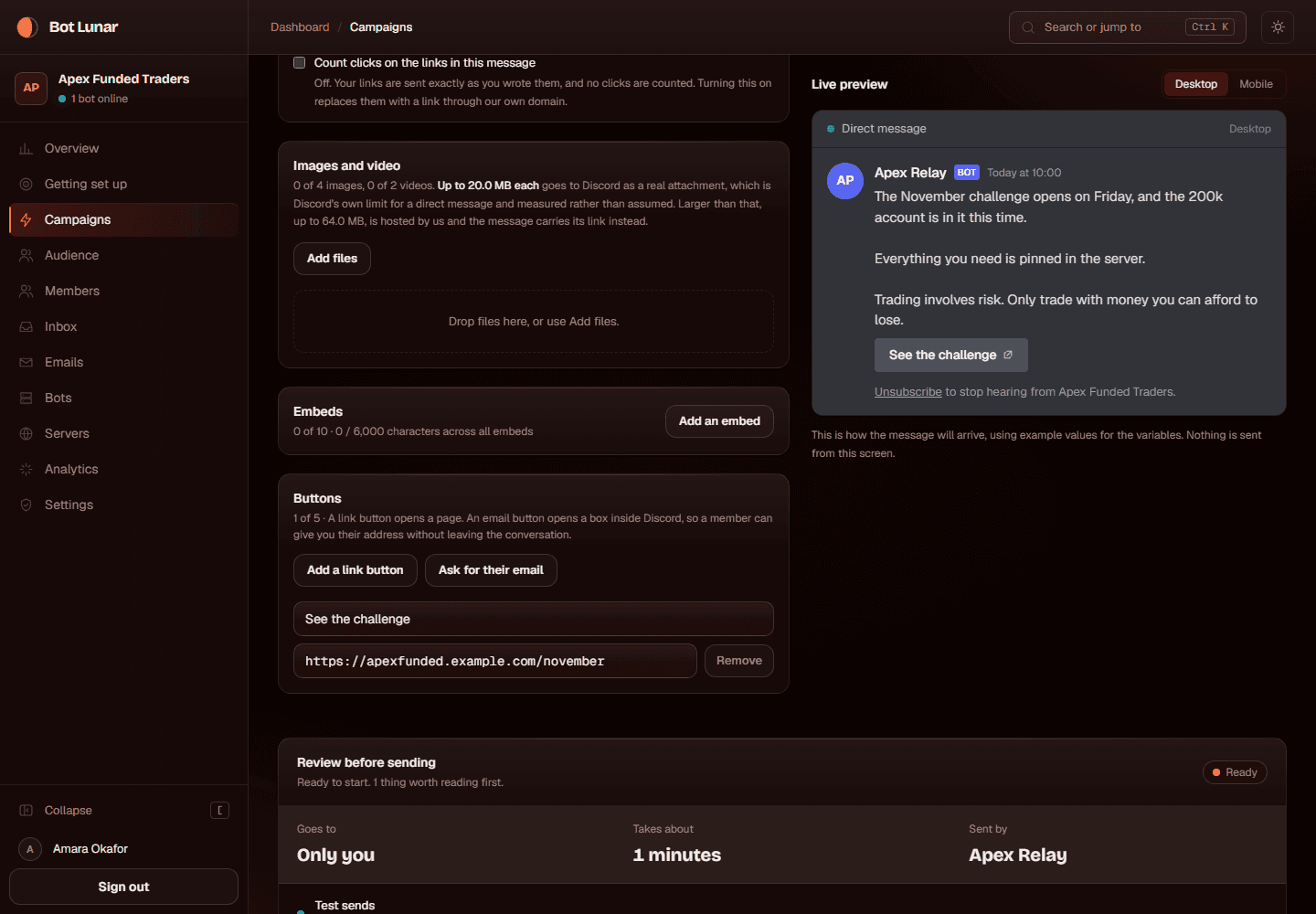
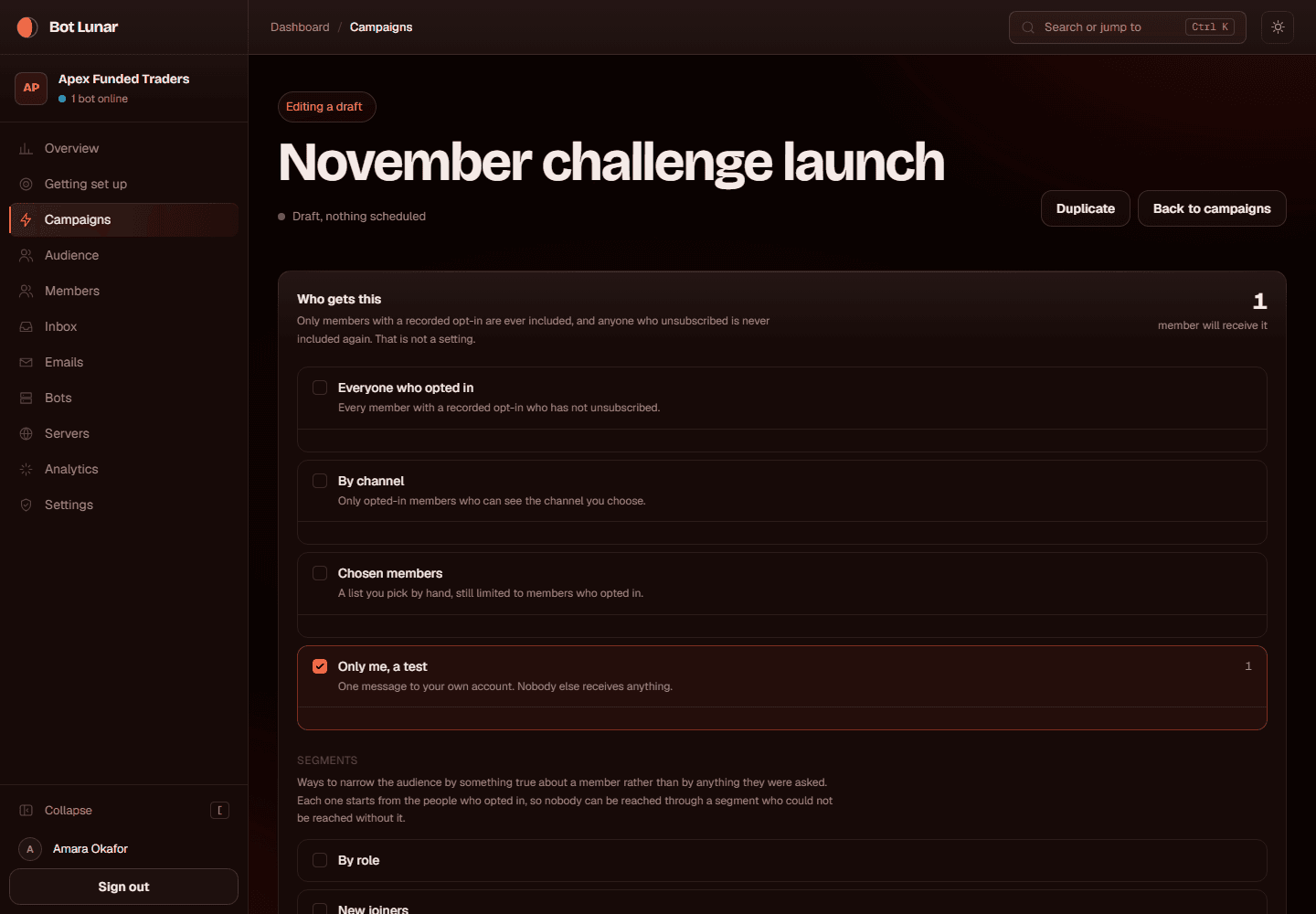
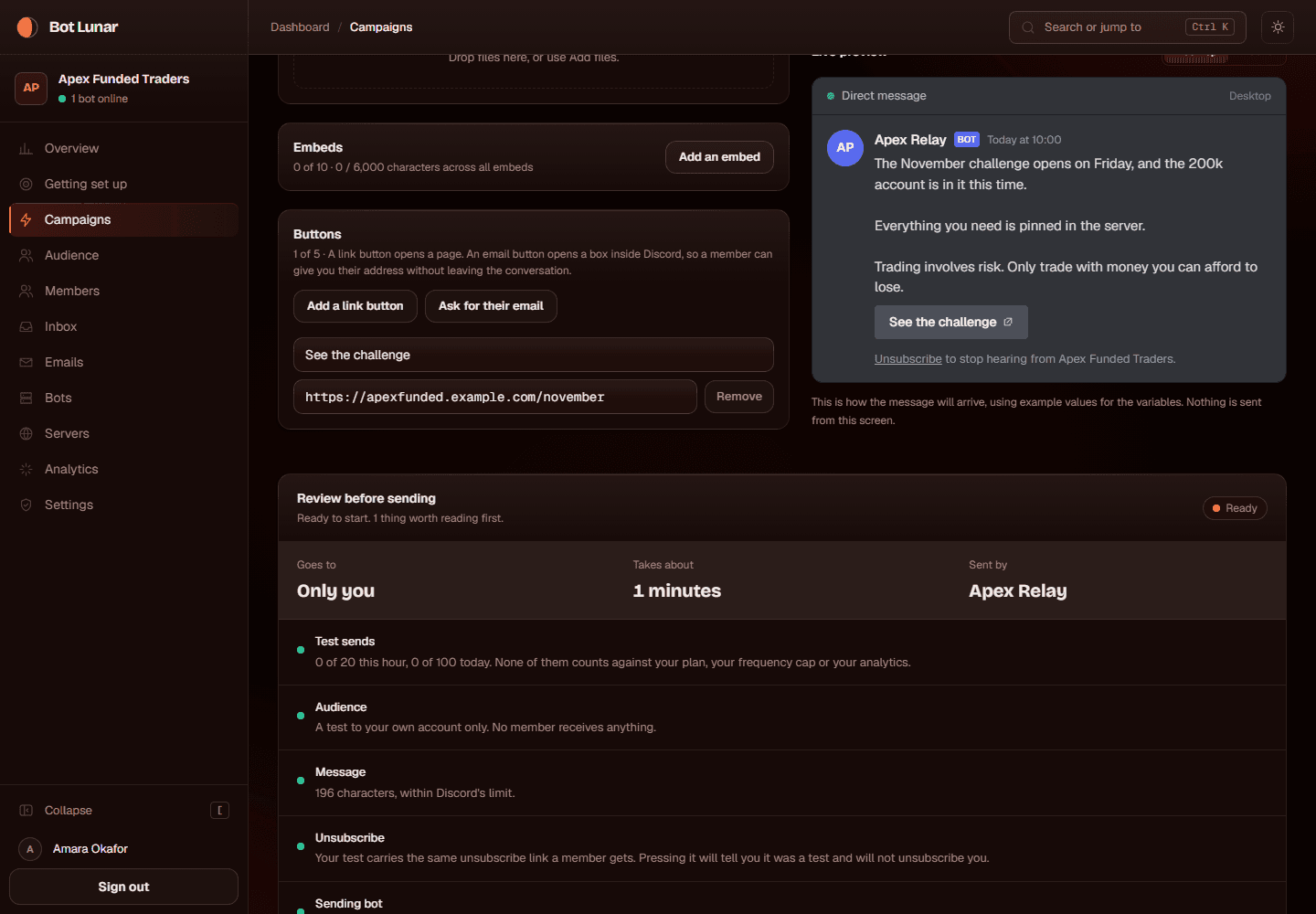
- One message to your own Discord account and nobody else's. It costs you nothing: not the frequency cap, not your campaign allowance, not your trial, not one figure in your analytics. It carries the same unsubscribe link a member gets, and pressing that link says it was a test and changes nothing. It has a limit of ours rather than yours, twenty an hour and a hundred a day, which exists to stop a loop rather than to ration careful checking.